Proper residential insulation is the single most impactful investment a homeowner can make to create a home that stays comfortable year-round, costs less to heat and cool, and holds its structural integrity for decades, and at JVC Insulation, we have spent over 25 years helping homeowners across New York, New Jersey, and Connecticut understand exactly what that means for their specific home. The conversation about insulation too often starts and ends with a single area, the attic, the basement, or a drafty wall, when the reality is that a home’s thermal envelope is a complete system. When one part of that system is missing or underperforming, the rest of the home compensates poorly, and the result is discomfort and energy waste that no HVAC upgrade alone can fix.
This article explains how we think about residential insulation as a whole-home system, why each area of the home matters, and what proper installation actually looks like for homes in our climate.
Why Is Residential Insulation the Foundation of Home Performance?
We use the word foundation deliberately, because insulation isn’t a finishing touch or an upgrade, it is the baseline condition that determines whether everything else in a home works the way it should. A high-efficiency furnace running in a poorly insulated home is like a powerful engine in a car with no doors. The energy is there. The output just escapes before it does its job.
Insulation performs three functions simultaneously. It slows the transfer of heat through walls, ceilings, and floors. It reduces air infiltration when installed with proper attention to the air barrier. And it manages the movement of moisture vapor through the building assembly, which is what determines whether a home stays dry and healthy or gradually accumulates the moisture damage that causes mold, rot, and declining indoor air quality.
In the climate we work in across New York, New Jersey, and Connecticut, all three of those functions are tested hard every single year. Cold winters drive heat out of the home through every gap and surface. Hot, humid summers push moisture into wall assemblies and create condensation in poorly sealed crawl spaces and basements. A home that isn’t insulated as a system, comprehensively, with the right product in the right location, fights its own climate constantly, and the homeowner pays for that fight every month on their energy bill.
Our team specializes in whole-home insulation assessments that identify exactly where a home is losing performance and what it takes to bring the entire building envelope up to the standard that modern energy codes and modern comfort expectations require.
What Happens When a Home Is Under-Insulated?
Most homeowners don’t realize their home is under-insulated until the symptoms become impossible to ignore, rooms that never reach the set temperature, floors that feel cold in winter regardless of how high the thermostat is set, humidity problems in the basement, or energy bills that keep rising even when usage habits haven’t changed.
By the time those symptoms are visible, the home has typically been losing conditioned air, accumulating moisture, and stressing its HVAC equipment for years. Under-insulation is rarely dramatic. It’s a slow, consistent drain on comfort, energy, and the structural components of the home that are quietly affected by moisture movement and temperature cycling over time.
We help property owners across Westchester, Putnam, and Dutchess Counties, and throughout our broader tri-state service area, diagnose those symptoms accurately. The fix is rarely just adding more insulation to one area. It’s understanding the building as a system, identifying where the air and moisture pathways are, and addressing them in the right sequence with the right materials.
How Do I Know If My Home Needs More Insulation?
The clearest signs that a home needs insulation attention are uneven temperatures between rooms or floors, high heating and cooling costs relative to the home’s square footage, drafts at floor level or around exterior walls, visible frost or condensation on interior surfaces in winter, and humidity or musty odors in basement or crawl space areas. Older homes, particularly those built before the 1980s in the Hudson Valley and surrounding areas, were frequently built with little or no wall insulation and minimal attic coverage by today’s standards. Even homes built in the 1990s and early 2000s often fall short of current energy code requirements. A professional assessment is the most reliable way to understand where a home stands and what it needs.
How Does Attic Insulation Impact the Whole Home?
The attic is where residential insulation has its single highest impact in most homes, and it is where we consistently find the largest gap between what exists and what the home needs. Heat rises. In winter, every degree of heat generated by a home’s heating system is moving upward, and without adequate insulation and air sealing at the attic level, that heat escapes through the roof assembly continuously. In summer, an uninsulated or under-insulated attic becomes an extreme heat sink, temperatures regularly reach 140 to 150 degrees in unvented attic spaces in our region, and that heat radiates directly into the living space below, driving up cooling loads dramatically.
We approach attic insulation in two ways depending on the home’s configuration. For homes with a traditional vented attic, we insulate the attic floor, the ceiling plane of the top living level, to the R-value required by code for our climate zone, which is typically R-49 to R-60. Critically, we also air-seal the attic floor before adding insulation, because adding insulation over an unsealed attic bypasses, the gaps around light fixtures, plumbing chases, partition wall top plates, and other penetrations, does almost nothing to stop the air movement that carries the majority of heat loss through that assembly.
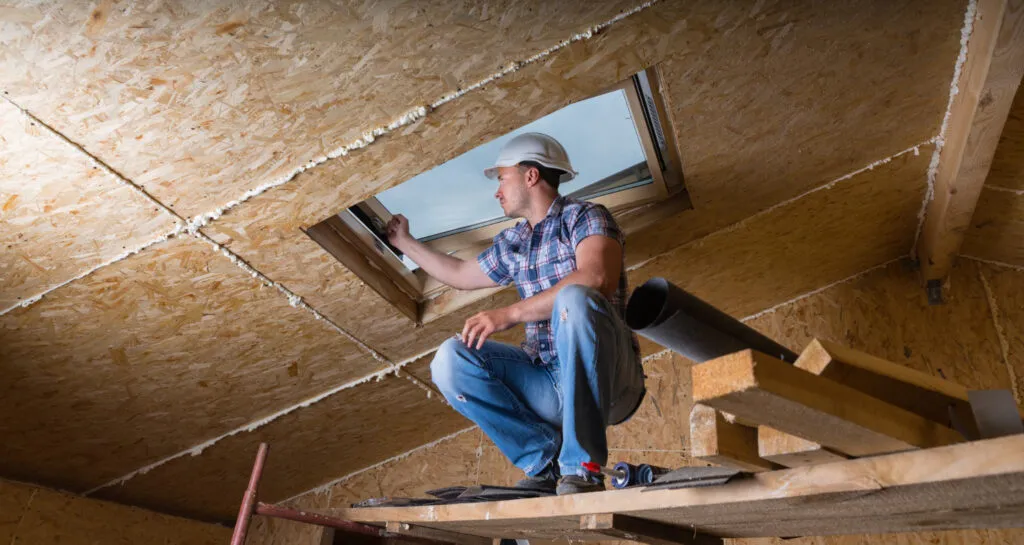
For homes where we’re bringing the attic into the conditioned envelope, particularly when HVAC equipment or ductwork is located in the attic space, we apply spray foam directly to the underside of the roof deck. This conditioned attic approach eliminates the extreme temperature swings in the attic that reduce HVAC efficiency, extends equipment life, and in many cases reduces total heating and cooling energy use more dramatically than any other single insulation measure we install.

Why Do Crawl Spaces and Basements Require Special Attention?
Crawl spaces and basements are where we see the most consistently incorrect insulation installations in residential homes across our service area, and where the consequences of getting it wrong are most serious over time. These are moisture-sensitive environments, and the wrong product or approach creates conditions that damage framing, support biological growth, and compromise the foundation of the home.
The most common mistake we encounter is fiberglass batt insulation installed between floor joists above an unconditioned crawl space. Fiberglass absorbs moisture vapor moving up from the ground, becomes saturated and heavy, loses its R-value, falls out of place, and over time creates exactly the conditions it was supposed to prevent. It is an approach that treats the crawl space as an exterior condition when the far more effective strategy is to bring the crawl space inside the home’s conditioned envelope.
We help property owners make that transition. We seal crawl space vents, apply closed cell spray foam to the interior face of the foundation walls and rim joists, install a heavy-duty ground vapor barrier, and create a dry, controlled environment that protects everything above it. The results are felt immediately in most cases, cold floors disappear, basement humidity drops, and the home’s heating system stops fighting ground moisture that has been working against it for years.
Basement walls present a parallel opportunity. Concrete and masonry walls move moisture vapor from the surrounding soil toward the interior continuously. We apply closed cell spray foam directly to those wall surfaces, interrupting moisture movement at the point of entry rather than allowing it to reach interior framing and finishes where it causes damage that is expensive to repair.
What Is the Right Way to Insulate a Crawl Space?
The most effective crawl space insulation approach in our climate combines full encapsulation with closed cell spray foam on the foundation walls and rim joists. We seal the ground with a durable vapor barrier, apply closed cell foam to the interior foundation walls to a depth that meets local code requirements, address every rim joist penetration and gap with foam, and ensure the space is either conditioned or properly ventilated according to the specific code that applies to the home. This approach eliminates the ground moisture pathway that is responsible for the majority of crawl space problems we see, protects the structural framing above, and creates a space that remains dry and accessible year-round. It is consistently one of the most cost-effective investments we make on behalf of homeowners relative to the comfort, structural protection, and energy savings it delivers.
How Does Wall Insulation Affect Energy Costs and Comfort?
Walls represent the largest surface area of the building envelope, and they are also the area where the gap between code-minimum insulation and genuinely high-performing insulation is most significant. A wall that meets the minimum required R-value on paper can still lose substantial energy through air infiltration at the top and bottom plates, around electrical boxes and outlet boxes, and through any gap in the insulation coverage that allows air to bypass the insulation layer entirely.
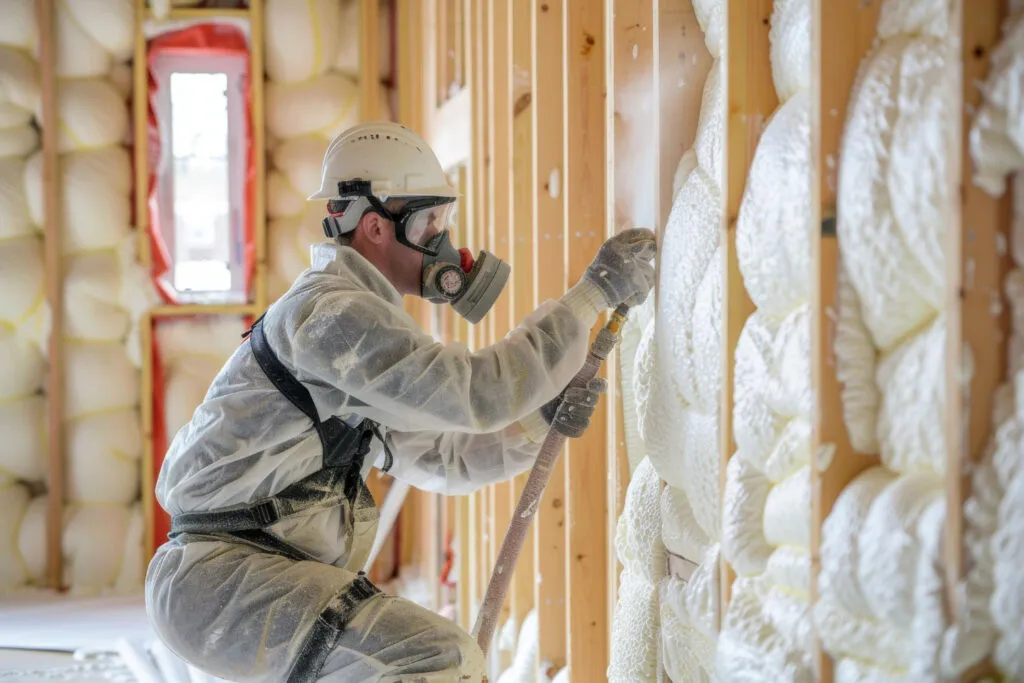
In new construction projects, we work closely with builders throughout Westchester County, Putnam County, Dutchess County, and across New Jersey and Connecticut to install wall assemblies that address both thermal resistance and air sealing from the start. Spray foam in exterior wall cavities, closed cell in exterior-facing assemblies, gives us both the insulation and the air barrier in a single product, which eliminates the need for a separate air barrier material and reduces the number of steps where installation quality can vary.
In existing homes where opening the walls isn’t practical, we focus on the highest-impact air sealing opportunities, particularly rim joists and attic bypasses, that deliver the most improvement for the investment. We are honest with homeowners about what is and isn’t cost-effective in an existing home, because we know the goal is long-term performance, not the largest possible scope of work.
What Is Sound Attenuation and Why Does It Matter in Residential Insulation?
Sound control is a dimension of residential insulation that homeowners frequently underestimate until they’ve lived in a home where it was done correctly. We install sound attenuation products in interior partition walls, floor and ceiling assemblies between living levels, around mechanical rooms, and in any space where acoustic privacy matters, bedrooms, bathrooms, home offices, and home theaters.
Open cell spray foam is one of the most effective materials we use for interior sound control. Its soft, porous structure absorbs acoustic energy rather than reflecting it, reducing sound transmission between rooms in a way that fiberglass batts, even at the same thickness, don’t match. When we install open cell foam in partition walls between bedrooms or around a bathroom during a renovation, the feedback from homeowners is consistently that the improvement in acoustic privacy is more noticeable than they expected.
We incorporate sound attenuation into whole-home insulation plans wherever it’s appropriate, because a home that is thermally comfortable but acoustically poor still isn’t a home that performs the way it should. We focus on long-term performance, safety, and efficiency in every aspect of the work we do, and acoustic comfort is part of that picture.
How Do We Determine What Your Home Specifically Needs?
No residential insulation plan should begin with a predetermined product recommendation. Every home we work on is different, different age, different construction type, different existing insulation conditions, different HVAC configuration, and different performance gaps that are driving the homeowner’s concerns. Our approach begins with understanding the home before recommending any solution.
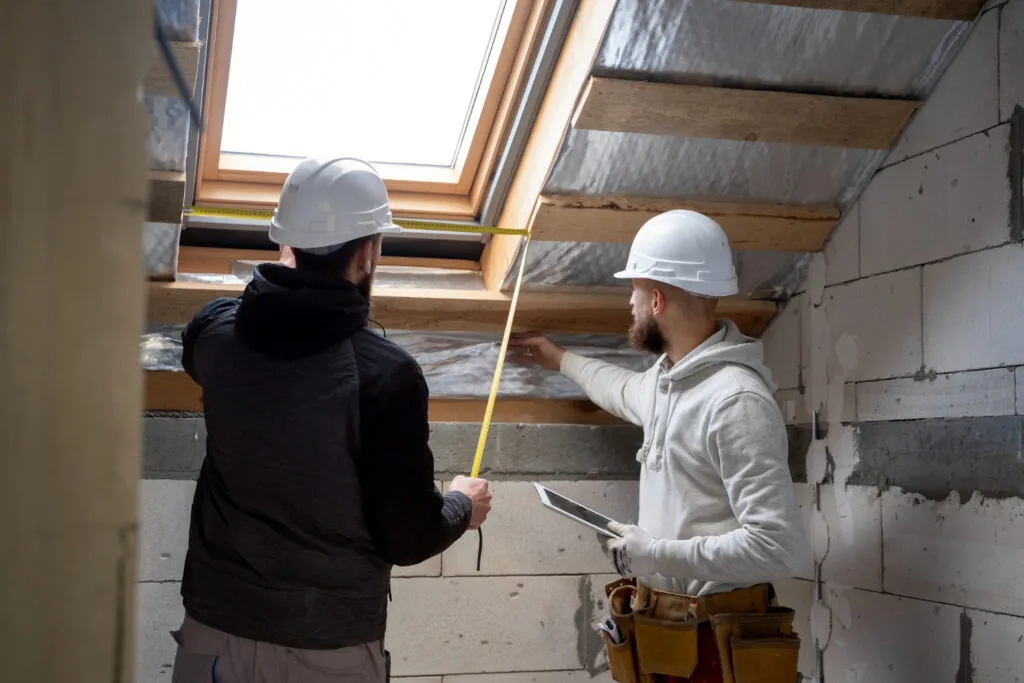
When we assess a home in New York, New Jersey, or Connecticut, we look at the building as a complete system. We identify where conditioned air is escaping, where moisture is entering, where the existing insulation is failing or absent, and which improvements will have the highest impact on comfort and energy performance relative to the investment. That assessment produces a prioritized plan, one that addresses the most critical areas first and gives homeowners a clear path to a fully performing home over whatever timeline makes sense for their budget.
We help property owners make decisions about their homes that they won’t need to revisit or repair for decades. That’s what quality workmanship means to us, and it’s the standard we have maintained across every residential project we’ve completed throughout our 25 years serving the tri-state area.
What Does a Residential Insulation Project With JVC Look Like in Practice?
When you work with us, the process begins with an honest conversation about what your home is doing and what you want it to do. We walk through the home, assess every area that affects the building envelope, and explain what we find in straightforward terms. No pressure, no predetermined packages, just a clear picture of where your home stands and what it needs.
From there, we develop a recommendation that matches the right product to the right location throughout the home: spray foam where air sealing and high R-value are the priority, fiberglass where cost-effective cavity fill is the goal, sound attenuation products where acoustic comfort matters, and a full encapsulation approach in crawl spaces and basements where moisture control is the foundation of everything else we do.
Every installation we complete is done with the attention to detail that long-term performance requires. We work throughout New York, New Jersey, and Connecticut, from the Hudson Valley and Westchester County to homes across northern New Jersey and Fairfield County, Connecticut. If you’re ready to understand what your home actually needs and what it would take to make it perform the way a well-insulated home should, we’re ready to help.
Frequently asked questions
Answers drawn directly from this article.
Why Is Residential Insulation the Foundation of Home Performance?
We use the word foundation deliberately, because insulation isn’t a finishing touch or an upgrade, it is the baseline condition that determines whether everything else in a home works the way it should. A high-efficiency furnace running in a poorly insulated home is like a powerful engine in a car with no doors. The energy is there. The output just escapes before it does its job.
Insulation performs three functions simultaneously. It slows the transfer of heat through walls, ceilings, and floors. It reduces air infiltration when installed with proper attention to the air barrier. And it manages the movement of moisture vapor through the building assembly, which is what determines whether a home stays dry and healthy or gradually accumulates the moisture damage that causes mold, rot, and declining indoor air quality.
In the climate we work in across New York, New Jersey, and Connecticut, all three of those functions are tested hard every single year. Cold winters drive heat out of the home through every gap and surface. Hot, humid summers push moisture into wall assemblies and create condensation in poorly sealed crawl spaces and basements. A home that isn’t insulated as a system, comprehensively, with the right product in the right location, fights its own climate constantly, and the homeowner pays for that fight every month on their energy bill.
Our team specializes in whole-home insulation assessments that identify exactly where a home is losing performance and what it takes to bring the entire building envelope up to the standard that modern energy codes and modern comfort expectations require.
What Happens When a Home Is Under-Insulated?
Most homeowners don’t realize their home is under-insulated until the symptoms become impossible to ignore, rooms that never reach the set temperature, floors that feel cold in winter regardless of how high the thermostat is set, humidity problems in the basement, or energy bills that keep rising even when usage habits haven’t changed.
By the time those symptoms are visible, the home has typically been losing conditioned air, accumulating moisture, and stressing its HVAC equipment for years. Under-insulation is rarely dramatic. It’s a slow, consistent drain on comfort, energy, and the structural components of the home that are quietly affected by moisture movement and temperature cycling over time.
We help property owners across Westchester, Putnam, and Dutchess Counties, and throughout our broader tri-state service area, diagnose those symptoms accurately. The fix is rarely just adding more insulation to one area. It’s understanding the building as a system, identifying where the air and moisture pathways are, and addressing them in the right sequence with the right materials.
How Do I Know If My Home Needs More Insulation?
The clearest signs that a home needs insulation attention are uneven temperatures between rooms or floors, high heating and cooling costs relative to the home’s square footage, drafts at floor level or around exterior walls, visible frost or condensation on interior surfaces in winter, and humidity or musty odors in basement or crawl space areas. Older homes, particularly those built before the 1980s in the Hudson Valley and surrounding areas, were frequently built with little or no wall insulation and minimal attic coverage by today’s standards. Even homes built in the 1990s and early 2000s often fall short of current energy code requirements. A professional assessment is the most reliable way to understand where a home stands and what it needs.
How Does Attic Insulation Impact the Whole Home?
The attic is where residential insulation has its single highest impact in most homes, and it is where we consistently find the largest gap between what exists and what the home needs. Heat rises. In winter, every degree of heat generated by a home’s heating system is moving upward, and without adequate insulation and air sealing at the attic level, that heat escapes through the roof assembly continuously. In summer, an uninsulated or under-insulated attic becomes an extreme heat sink, temperatures regularly reach 140 to 150 degrees in unvented attic spaces in our region, and that heat radiates directly into the living space below, driving up cooling loads dramatically.
We approach attic insulation in two ways depending on the home’s configuration. For homes with a traditional vented attic, we insulate the attic floor, the ceiling plane of the top living level, to the R-value required by code for our climate zone, which is typically R-49 to R-60. Critically, we also air-seal the attic floor before adding insulation, because adding insulation over an unsealed attic bypasses, the gaps around light fixtures, plumbing chases, partition wall top plates, and other penetrations, does almost nothing to stop the air movement that carries the majority of heat loss through that assembly.
For homes where we’re bringing the attic into the conditioned envelope, particularly when HVAC equipment or ductwork is located in the attic space, we apply spray foam directly to the underside of the roof deck. This conditioned attic approach eliminates the extreme temperature swings in the attic that reduce HVAC efficiency, extends equipment life, and in many cases reduces total heating and cooling energy use more dramatically than any other single insulation measure we install.
Why Do Crawl Spaces and Basements Require Special Attention?
Crawl spaces and basements are where we see the most consistently incorrect insulation installations in residential homes across our service area, and where the consequences of getting it wrong are most serious over time. These are moisture-sensitive environments, and the wrong product or approach creates conditions that damage framing, support biological growth, and compromise the foundation of the home.
The most common mistake we encounter is fiberglass batt insulation installed between floor joists above an unconditioned crawl space. Fiberglass absorbs moisture vapor moving up from the ground, becomes saturated and heavy, loses its R-value, falls out of place, and over time creates exactly the conditions it was supposed to prevent. It is an approach that treats the crawl space as an exterior condition when the far more effective strategy is to bring the crawl space inside the home’s conditioned envelope.
We help property owners make that transition. We seal crawl space vents, apply closed cell spray foam to the interior face of the foundation walls and rim joists, install a heavy-duty ground vapor barrier, and create a dry, controlled environment that protects everything above it. The results are felt immediately in most cases, cold floors disappear, basement humidity drops, and the home’s heating system stops fighting ground moisture that has been working against it for years.
Basement walls present a parallel opportunity. Concrete and masonry walls move moisture vapor from the surrounding soil toward the interior continuously. We apply closed cell spray foam directly to those wall surfaces, interrupting moisture movement at the point of entry rather than allowing it to reach interior framing and finishes where it causes damage that is expensive to repair.
What Is the Right Way to Insulate a Crawl Space?
The most effective crawl space insulation approach in our climate combines full encapsulation with closed cell spray foam on the foundation walls and rim joists. We seal the ground with a durable vapor barrier, apply closed cell foam to the interior foundation walls to a depth that meets local code requirements, address every rim joist penetration and gap with foam, and ensure the space is either conditioned or properly ventilated according to the specific code that applies to the home. This approach eliminates the ground moisture pathway that is responsible for the majority of crawl space problems we see, protects the structural framing above, and creates a space that remains dry and accessible year-round. It is consistently one of the most cost-effective investments we make on behalf of homeowners relative to the comfort, structural protection, and energy savings it delivers.
How Does Wall Insulation Affect Energy Costs and Comfort?
Walls represent the largest surface area of the building envelope, and they are also the area where the gap between code-minimum insulation and genuinely high-performing insulation is most significant. A wall that meets the minimum required R-value on paper can still lose substantial energy through air infiltration at the top and bottom plates, around electrical boxes and outlet boxes, and through any gap in the insulation coverage that allows air to bypass the insulation layer entirely.
In new construction projects, we work closely with builders throughout Westchester County, Putnam County, Dutchess County, and across New Jersey and Connecticut to install wall assemblies that address both thermal resistance and air sealing from the start. Spray foam in exterior wall cavities, closed cell in exterior-facing assemblies, gives us both the insulation and the air barrier in a single product, which eliminates the need for a separate air barrier material and reduces the number of steps where installation quality can vary.
In existing homes where opening the walls isn’t practical, we focus on the highest-impact air sealing opportunities, particularly rim joists and attic bypasses, that deliver the most improvement for the investment. We are honest with homeowners about what is and isn’t cost-effective in an existing home, because we know the goal is long-term performance, not the largest possible scope of work.
What Is Sound Attenuation and Why Does It Matter in Residential Insulation?
Sound control is a dimension of residential insulation that homeowners frequently underestimate until they’ve lived in a home where it was done correctly. We install sound attenuation products in interior partition walls, floor and ceiling assemblies between living levels, around mechanical rooms, and in any space where acoustic privacy matters, bedrooms, bathrooms, home offices, and home theaters.
Open cell spray foam is one of the most effective materials we use for interior sound control. Its soft, porous structure absorbs acoustic energy rather than reflecting it, reducing sound transmission between rooms in a way that fiberglass batts, even at the same thickness, don’t match. When we install open cell foam in partition walls between bedrooms or around a bathroom during a renovation, the feedback from homeowners is consistently that the improvement in acoustic privacy is more noticeable than they expected.
We incorporate sound attenuation into whole-home insulation plans wherever it’s appropriate, because a home that is thermally comfortable but acoustically poor still isn’t a home that performs the way it should. We focus on long-term performance, safety, and efficiency in every aspect of the work we do, and acoustic comfort is part of that picture.
How Do We Determine What Your Home Specifically Needs?
No residential insulation plan should begin with a predetermined product recommendation. Every home we work on is different, different age, different construction type, different existing insulation conditions, different HVAC configuration, and different performance gaps that are driving the homeowner’s concerns. Our approach begins with understanding the home before recommending any solution.
When we assess a home in New York, New Jersey, or Connecticut, we look at the building as a complete system. We identify where conditioned air is escaping, where moisture is entering, where the existing insulation is failing or absent, and which improvements will have the highest impact on comfort and energy performance relative to the investment. That assessment produces a prioritized plan, one that addresses the most critical areas first and gives homeowners a clear path to a fully performing home over whatever timeline makes sense for their budget.
We help property owners make decisions about their homes that they won’t need to revisit or repair for decades. That’s what quality workmanship means to us, and it’s the standard we have maintained across every residential project we’ve completed throughout our 25 years serving the tri-state area.
What Does a Residential Insulation Project With JVC Look Like in Practice?
When you work with us, the process begins with an honest conversation about what your home is doing and what you want it to do. We walk through the home, assess every area that affects the building envelope, and explain what we find in straightforward terms. No pressure, no predetermined packages, just a clear picture of where your home stands and what it needs.
From there, we develop a recommendation that matches the right product to the right location throughout the home: spray foam where air sealing and high R-value are the priority, fiberglass where cost-effective cavity fill is the goal, sound attenuation products where acoustic comfort matters, and a full encapsulation approach in crawl spaces and basements where moisture control is the foundation of everything else we do.
Every installation we complete is done with the attention to detail that long-term performance requires. We work throughout New York, New Jersey, and Connecticut, from the Hudson Valley and Westchester County to homes across northern New Jersey and Fairfield County, Connecticut. If you’re ready to understand what your home actually needs and what it would take to make it perform the way a well-insulated home should, we’re ready to help.